




By the Whatfinger News Team
Michael Anthony, our chief editor here at Whatfinger News, tasked me with digging into this latest video making the rounds: “The Dark Ages May Not Have Happened — Someone Erased 300 Years of History.” (Above) Our readers at Whatfinger love a good mystery—conspiracies, erased truths, elite cover-ups, the works. And with millions of pageviews monthly on everything from red-pill blasts to health freedom and unfiltered takes, this one fits right in. But as always, we print the truth, not just the clicks. So let’s cut through the hype.
The Phantom Time Hypothesis: A Timeline Heist?
The theory, first pushed hard by German writer Heribert Illig in the 1990s, claims that roughly 297 years between about 614 AD and 911 AD were fabricated. Poof—gone. That means the Early Middle Ages, including the legendary Charlemagne (supposed father of Europe), might be a grand invention cooked up by Holy Roman Emperor Otto III, Pope Sylvester II, and maybe Byzantine insiders. Motive? Slot Otto’s reign neatly into the symbolically juicy Year 1000 AD, cementing divine-right vibes for the new millennium.
The video from LifesBiggestQuestions lays it out with dramatic flair: thin archaeological records in that slice of Europe, calendar drift from the Julian to Gregorian reform (they skipped 10 days in 1582), and the idea that monks and scribes either joined the con or copied fake docs for centuries. If true, our whole sense of time is off. We’d be living in the 1700s right now. Wild, right? Perfect conspiracy fuel for folks tired of mainstream history’s polished narratives.
It taps into real frustrations. Why is the post-Roman record in Western Europe so spotty? Declining cities, fewer grand projects, lost knowledge—sounds like the kind of gap power players might exploit. Our audience gets skeptical when elites rewrite the script, whether it’s election integrity, media bias, or ancient chronicles.
Where the Theory Gets Some Traction (But Not Enough)
Early medieval Europe was messy after Rome’s fall. Urban life contracted, trade simplified, and written sources thinned out compared to Roman glory or the later High Middle Ages. Forgeries happened—medieval rulers and churchmen faked documents for land, prestige, or politics all the time. The calendar did drift, and the Gregorian fix was a clerical adjustment tied to Easter calculations from the Council of Nicaea in 325 AD, not a perfect reset from Caesar’s day. Illig’s math plays on that confusion.
Plus, history is written by the victors. Renaissance thinkers like Petrarch later trashed the “Dark Ages” to hype their own rebirth. Modern over-corrections sometimes paint the period as non-stop innovation, but material evidence shows real contraction in parts of the West: simpler pottery, fewer coins in circulation, more localized life.
For Whatfinger readers digging into UN overreach, shadow bans, or processed food deceptions, this scratches the same itch: Don’t trust the official story blindly. There are almost always interests behind the scenes who want you to believe things that are not true. Money is the usual cause, or power.
But Here’s the Truth: It Doesn’t Hold Up
Look, we love a good alternative take, but evidence matters. The Phantom Time Hypothesis collapses under global scrutiny:
- Cross-cultural records: The “missing” centuries line up with China’s Tang Dynasty (art, bureaucracy, detailed annals), the explosive rise of Islam (Muhammad, caliphates, conquests), and the Byzantine continuation. The Battle of Talas in 751 AD—Abbasid Caliphate vs. Tang China—anchors the timeline across empires with zero reason to coordinate a lie.
- Hard science: Tree-ring dating (dendrochronology) gives unbroken annual records. Radiocarbon dating, calibrated against it, matches artifacts. Astronomy seals it—Roman eclipses (like Pliny the Elder’s in 59 AD), Halley’s Comet sightings in China and elsewhere align perfectly with modern calculations. Shift the calendar by 300 years and the stars don’t lie.
- Physical proof: Coins, inscriptions, churches (Aachen’s Palatine Chapel), manuscripts, and trade goods from the era exist across Europe, the Middle East, and beyond. Charlemagne has contemporary charters and diplomatic ties. Faking all that globally? Logistically insane.
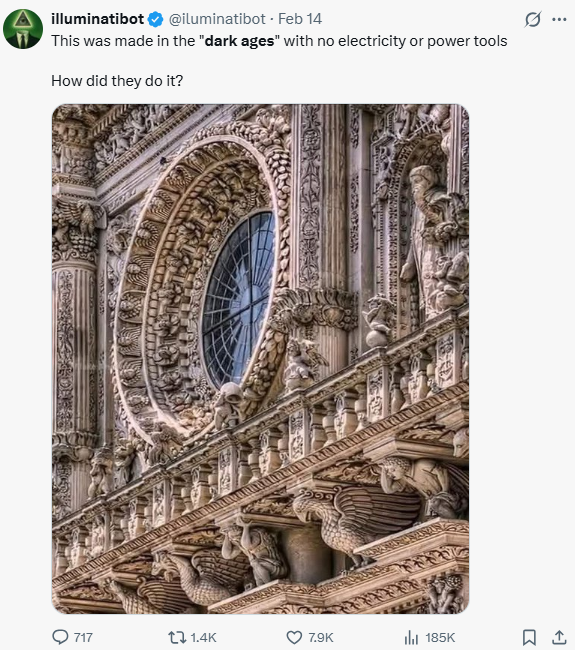
Mainstream historians call it pseudohistory for good reason. It’s Eurocentric, ignores independent civilizations, and requires a conspiracy bigger than anything we’ve seen in modern times. The “Dark Ages” weren’t a total blackout—they included monastic scholarship, stunning art like the Lindisfarne Gospels and Sutton Hoo treasures, and foundations for later booms. The Islamic Golden Age overlapped, preserving and advancing knowledge.
Real Mysteries Remain
We’re not shilling for textbook orthodoxy. The post-Roman transition was rough—volcanic winters, plagues, migrations. Knowledge gaps exist because stuff got lost, not fabricated en masse. That’s where the real intrigue lies for truth-seekers: how societies rebuild, what elites preserve or suppress, and why certain narratives dominate.
This video is entertaining clickbait that highlights legitimate questions about historical records. But the phantom centuries? Evidence says they happened. Our MAGA audience demands truth over comforting myths—whether it’s about elections, health, or ancient timelines. The past is messy enough without inventing erasures.
What do you think? Drop your takes in the comments. Is this the greatest historical con, or just another overhyped theory?
Whatfinger News Team on Duty for This One: Ben and Beth
Hey folks, if you’re the type who loves diving into historical rabbit holes, conspiracy-adjacent mysteries, and picking up killer factoids along the way, do yourself a favor and grab Beth’s Quantum Dreams. Michael Anthony stitched it together from Beth’s wild notes, and damn if it isn’t one of the most entertaining rides we’ve put out.
Think quantum dreams blurring prophecy and reality, moral gut-punches delivered through recurring characters (with Ben as your everyman anchor), and deep dives into the top short stories and mystery classics—repackaged with that signature Whatfinger crew flair. History, philosophy, humor, and a dash of “what if the timeline is glitching?” energy that pairs perfectly with theories like phantom time.
It’s raw, witty, and never preachy—exactly the kind of unfiltered mind fuel our readers crave. Never too late to feed the brain (or question everything).
Check it out here: Beth’s Quantum Dreams (or search it on Amazon—support the home team).
You’ll thank us in your next vivid dream.
Follow-Up References:
- Phantom Time Hypothesis – Wikipedia
- The Conspiratory: About Three Centuries of the Early Middle Ages
- Big Think: Phantom Time Hypothesis
- Skeptical Science: Explaining Why the Phantom Time Hypothesis Is Wrong
- IFLScience: How “Dark” Were the Dark Ages, Really?
Get on over to Whatfinger.com – Whatfinger News does millions of pageviews a month for a reason…. Truth, Justice, the American way, plus news on the Left as well – all links from all sites gives you the true news. – CLICK HERE 🛑


